The quick comparison
| HDPE | PVC (uPVC AND mPVC) | |
|---|---|---|
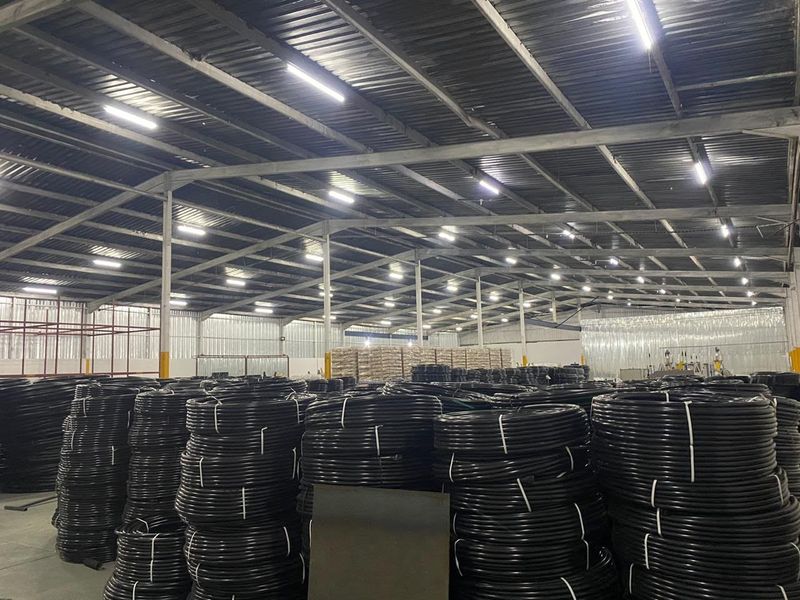
| Supplied as | Coils | Straight lengths, socketed |
| Our sizes | 20–110 mm | 50–500 mm |
| Our classes | Class 6–20 (certified range) | uPVC Class 4–20 · mPVC Class 6–20 |
| Stiffness | Flexible: follows the ground | Rigid: straight runs in a prepared trench |
| Joints | Few joints over long runs | Socket with factory-fitted rubber seal every 6 m (5.8 m from 355 mm) |
| Colour | Black | uPVC light blue · mPVC dark blue |
| Best for | Connections, borehole lines, stock water, pressurised irrigation | Mains, bulk water, reticulation, irrigation mains |
When HDPE is the better choice
- Long runs with few joints: coils lay out over long distances, so there are fewer joints and fewer places for leaks.
- Uneven or moving ground: polyethylene is flexible and follows the ground instead of fighting it.
- Remote sites: coils are light and easy to carry and lay by hand.
- Typical jobs: house and standpipe connections, borehole delivery lines, stock-water runs and pressurised irrigation.
When PVC is the better choice
- Larger diameters: our PVC pressure pipe runs up to 500 mm; our HDPE stops at 110 mm.
- Rigid, straight mains: straight lengths with a socket and factory-fitted rubber seal are quick to lay in a prepared trench.
- Smooth bore: low friction keeps pressure losses and pumping costs down on long mains.
- Typical jobs: municipal and village mains, bulk water, reticulation and irrigation mains.
Where LDPE fits
LDPE is softer, more flexible and more economical than HDPE, and is made for low pressure: Class 3 or 6. It's the pipe for drip and sprinkler laterals, gardens and smallholdings, not for mains or pressurised supply lines.
Using both in one project
Many networks use both: PVC for the mains along the streets or across the farm, and HDPE for the connections and long branches. Tell us the layout and we'll suggest the right pipe for each part.